Gioia.

Voice AI and home sensors for aging parents

Help them stay home longer.
Less worry. More joy.

Gioia (say “JOY-ah”) is a voice companion on the TV your mum or dad already watches, with small sensors around the home. It talks with them, fills their day with things worth doing, and brings the family’s photos, songs and voice notes to their screen, with a short update back to you. When their routine changes, it notices and tells you what matters.

Pilots in Belgium and the San Francisco Bay Area. Works with any TV that has HDMI.

The Gioia hub on a TV console below a TV showing a morning greeting for Margaret, with its small sensors, voice puck, button and e-paper board around it, in a warm living room with an armchair, walking cane and family photos.
Voice
More joy

Gioia talks with them and suggests up to four things a day: a walk, a chair workout, a song you sent, a call to a friend. No feeds, no autoplay.

Sensors
Less worry

Door, fridge, bed and bathroom sensors learn their routine. When something changes, Gioia asks them first, then tells you.

Together
Home for longer

Staying active, connected and noticed early are what keep people independent. Gioia puts all three in one box on the TV.

Why it matters

Long, empty days are not harmless.

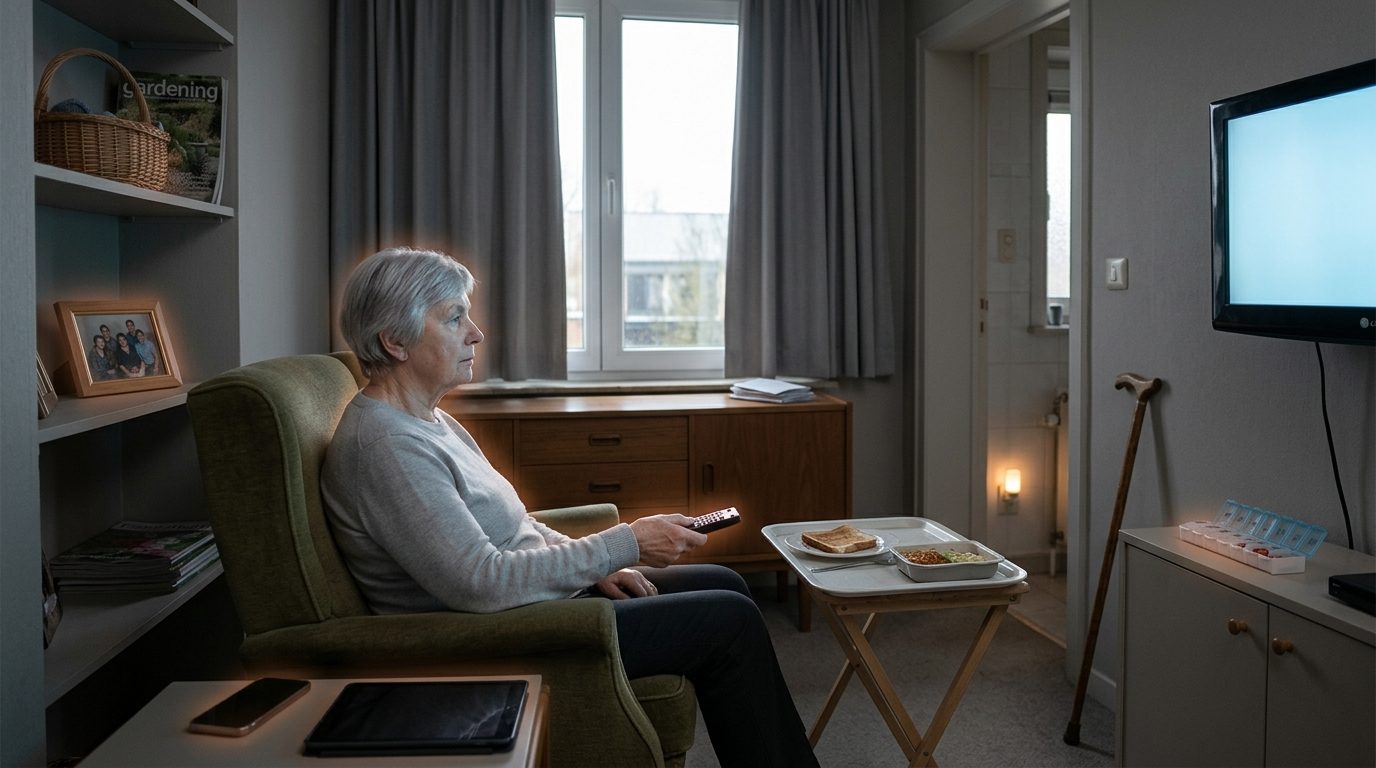
Three in four people over 50 want to grow old in their own home.1 More than one in four Americans over 65 live alone.2 Alone, days shrink: more hours in the chair, fewer meals cooked, fewer calls. Each of these is linked to worse health.

50%

higher risk of dementia is linked to social isolation and loneliness.3

33%

higher dementia risk with more than 3 hours of TV a day, compared with under 1 hour.4

45%

of dementia cases could be prevented or delayed by tackling 14 risk factors, including inactivity and isolation.5

1 in 4

adults over 65 fall each year.6

An older woman sits alone in a dim living room, remote in hand, facing a TV. Around her: an untouched gardening magazine and knitting basket, a family photo, a phone face down and a dark tablet, unopened letters, toast and a ready meal on a tray, a pill organiser, and a night light in the hallway to the bathroom.
Lost interest
Loneliness
Inactivity
Tech feels hard
Self-care
Night bathroom trips
Not cooking
Passive TV
Health worries
  • Inactivity
  • Passive TV
  • Lost interest
  • Tech feels hard
  • Loneliness
  • Health worries
  • Self-care
  • Not cooking
  • Night bathroom trips

A day with Gioia

A few good ideas a day, shaped around them. The rest of the time, the TV is theirs.

How many, what and when is up to each family. Here is what a day can look like.

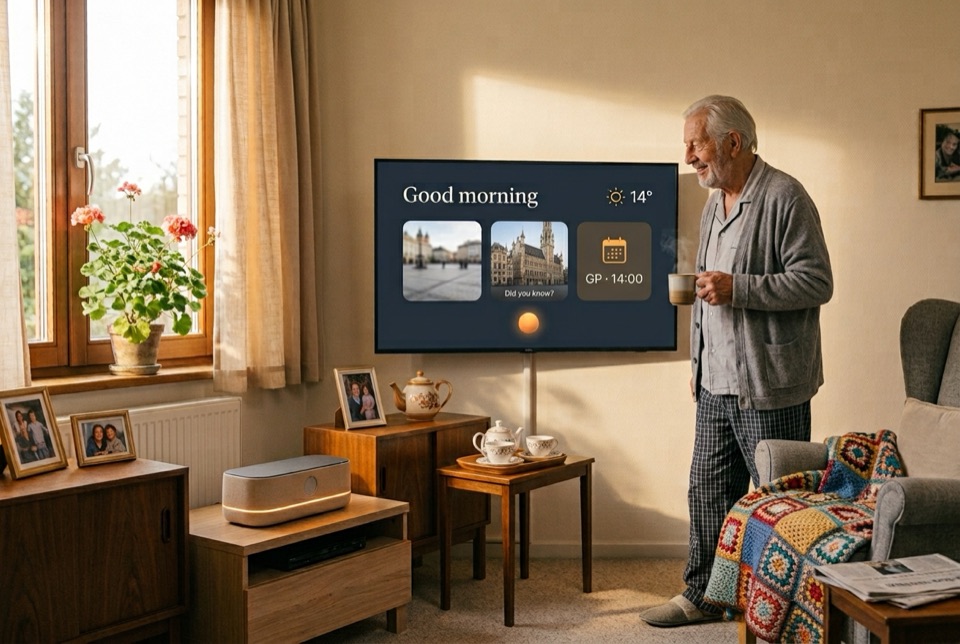
An older man in a cardigan and pyjamas stands in his sunlit living room with a cup of tea, smiling at his TV, which shows “Good morning”, the weather, photos of the Grand Place in Brussels, a “Did you know?” card and a GP appointment at 14:00; the hub glows below.
08:30

Morning briefing

The TV switches on when they walk in. Practical weather, three news items in neutral language from licensed sources, and one fact they didn’t know.

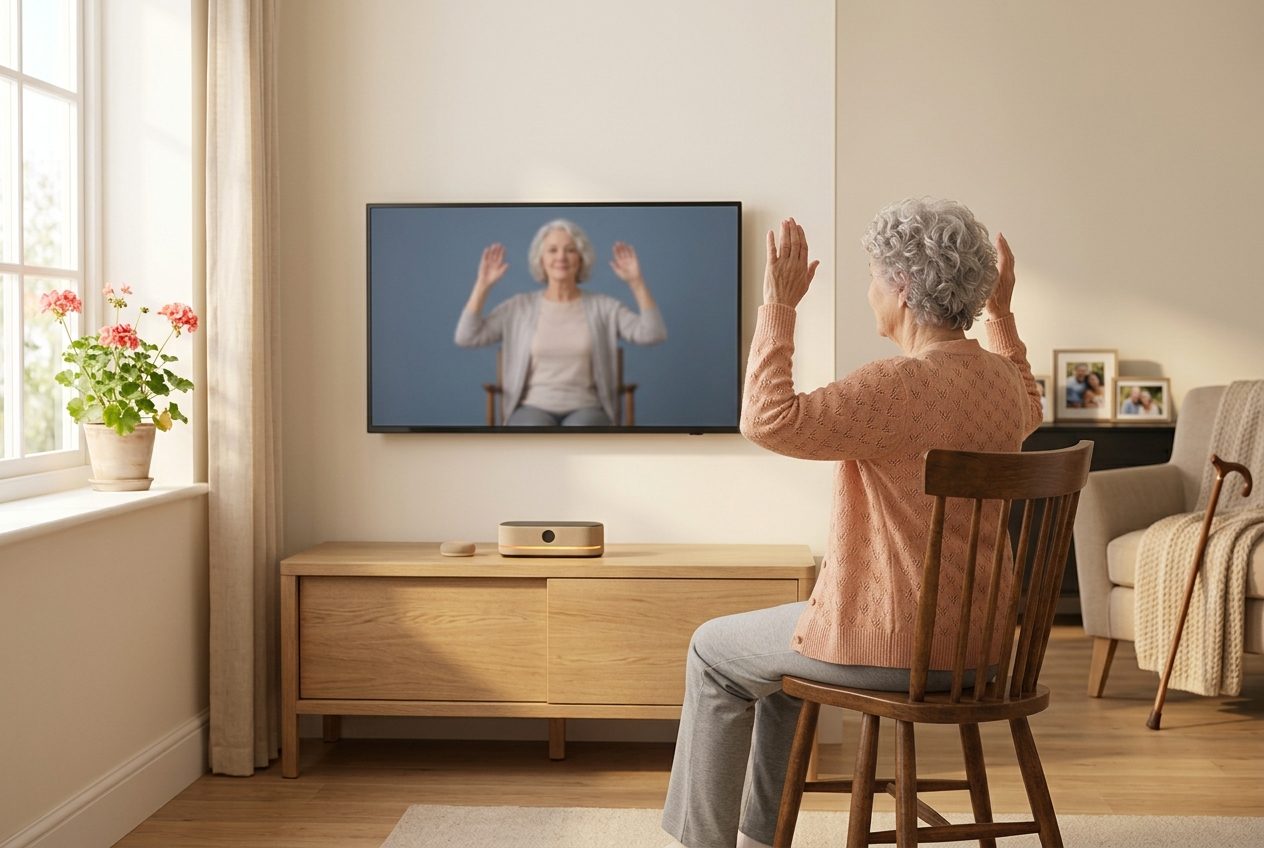
A woman in her eighties in a peach cardigan does a seated arm exercise on a wooden chair, following an instructor of a similar age on her TV.
09:30

Move

10 to 15 minutes of strength and balance, designed with physiotherapists, seated or standing. Exercise like this cuts the rate of falls by about a quarter.7

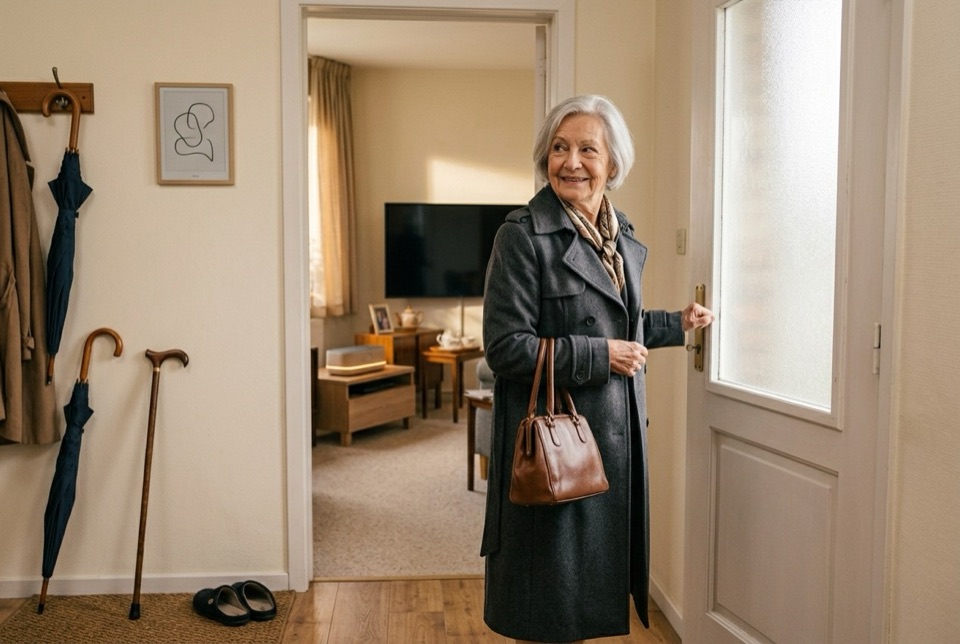
An older woman in a grey wool coat and silk scarf, handbag on her arm, smiles back over her shoulder as she opens the front door; walking sticks and umbrellas hang in the hallway and the hub glows in the living room behind her.
14:00

GP visit

A reminder the evening before, again in the morning, and when it’s time to leave. If the front door hasn’t opened, Gioia checks. Back home, it asks how it went and passes on what they want shared.

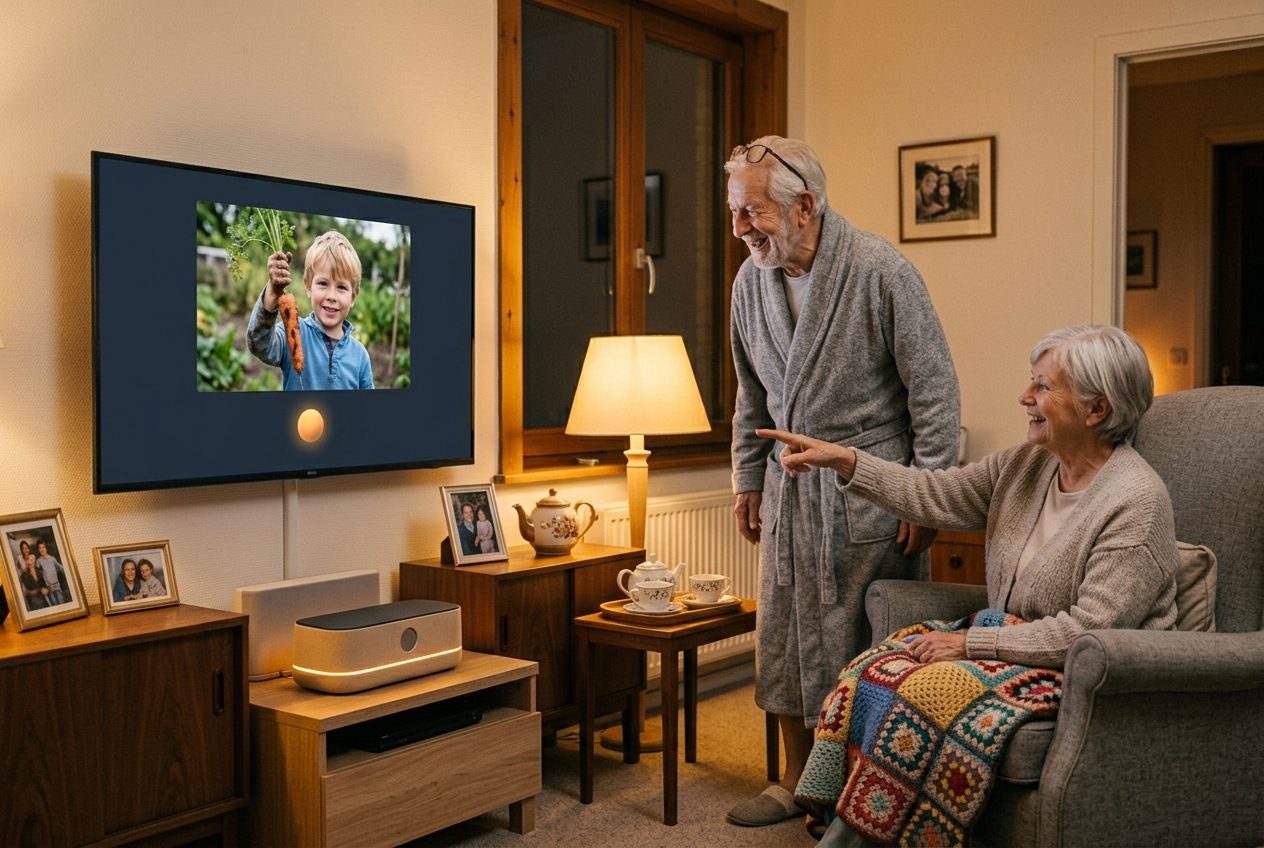
An older couple in their living room in the evening, laughing and pointing at their TV, which shows a photo of their grandson holding up a carrot from the garden; the hub glows amber below the TV.
19:30

Family

Today’s photos and voice notes, music from their era, a question about their life to answer if they want, and a short stretch.

And the basics, every day, by voice.

Medication reminders

At the right time, confirmed by voice. Gioia reminds, it never advises on doses.

Appointments and visits

The evening before, that morning, and when it’s time to leave. Then: “How did it go?”

Calls by voice

“Call Sarah.” No buttons, no contact lists, no new phone to learn.

Day, date and weather

“What day is it?” gets the same friendly answer every time, however often it’s asked.

Music and messages

“Play my music.” “Any messages?” Family photos and voice notes on the big screen.

Breaks from long TV

After a long stretch of viewing, a short suggestion to stand up, stretch or call someone.

How it notices

Sensors tell Gioia when to speak and when to stay quiet.

The hub senses the living room and the TV. With their consent, four sensors on the front door, fridge, bed and bathroom cover the rest of the day.
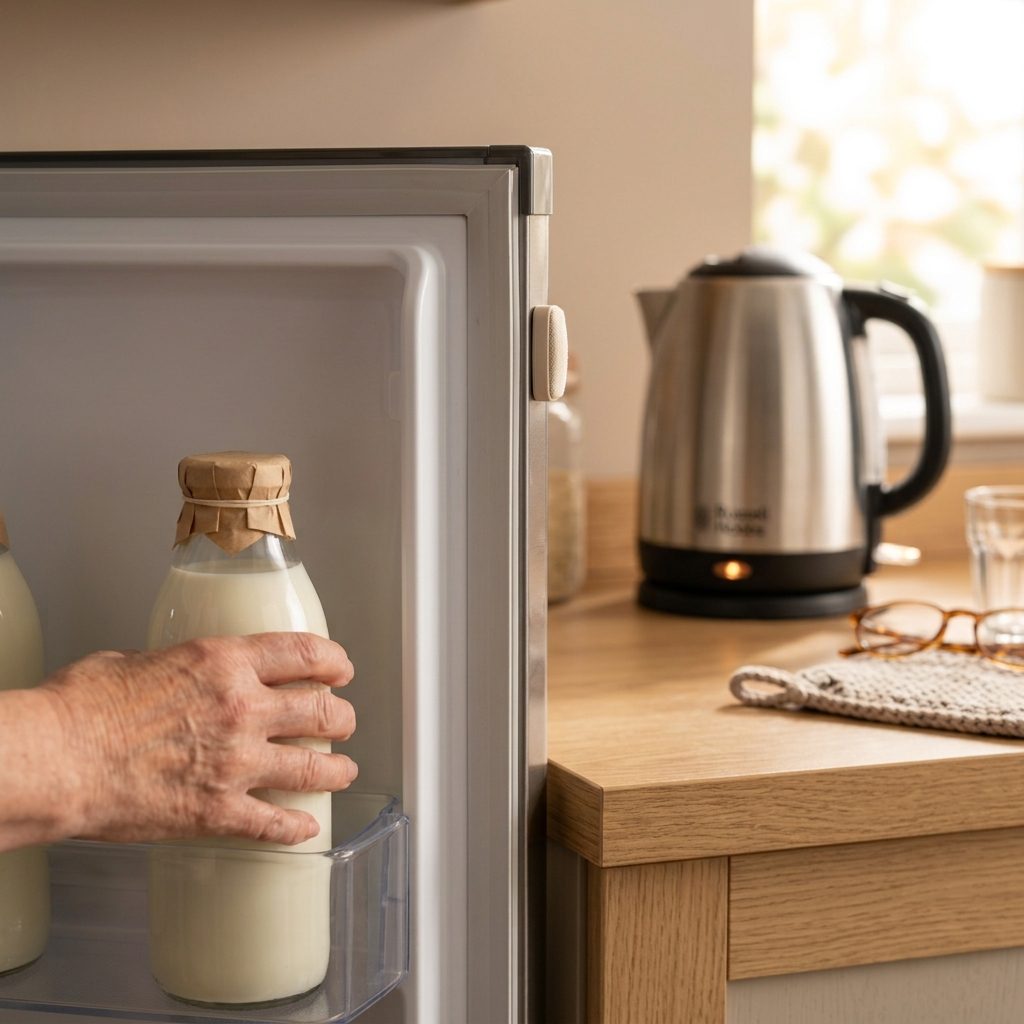
An older woman’s hand takes a milk bottle from the fridge door; a small sand-coloured sensor sits on the edge of the fridge, a kettle and reading glasses on the counter behind.

What each sensor tells Gioia

  • Living room hubWhether someone is in the room, standing up or watching TV.
  • Front doorWhen they leave and when they’re back. Never where they went.
  • FridgeMealtimes, from when the door opens.
  • BedWhen they get up, go to bed, and how restless the night was.
  • BathroomNight visits, compared with their usual.

These sensors have no camera or microphone. They report open or closed, occupied or empty.

Timing

Gioia speaks when they walk in, stand up or turn the TV off. Not to an empty room, not during shows they’ve marked as protected, not at night.

Nudges

A walk when it’s dry, a stretch after a long sit, a reminder to leave for an appointment, a check-in when they’re home. One at a time. “Not now” always works.

Patterns

After three weeks Gioia knows their normal, not an average. When something changes, it asks them first and tells family only what they agreed to share.

A Tuesday with Gioia

What the home noticed, and what Gioia did about it.

07:521 of 5
Noticed · Bed, living room
Bed empty, then movement in the living room.
Gioia
Switches on the TV with a greeting: weather, today’s plan, a photo from Sarah.
13:302 of 5
Noticed · Front door, calendar
Leave-by time for the GP passes. The front door hasn’t opened.
Gioia
“Are you still going to the GP at two?” It had slipped their mind. Sarah gets an offer to rebook.
16:403 of 5
Noticed · TV, living room
TV on for 90 minutes, someone in the room.
Gioia
One suggestion: “It’s still light. Fancy a short walk to the corner?”
19:054 of 5
Noticed · Living room
Standing up from the sofa.
Gioia
Tom’s voice note, waiting since 15:00, plays now instead of during the quiz show.
03:105 of 5
Noticed · Front door, hallway
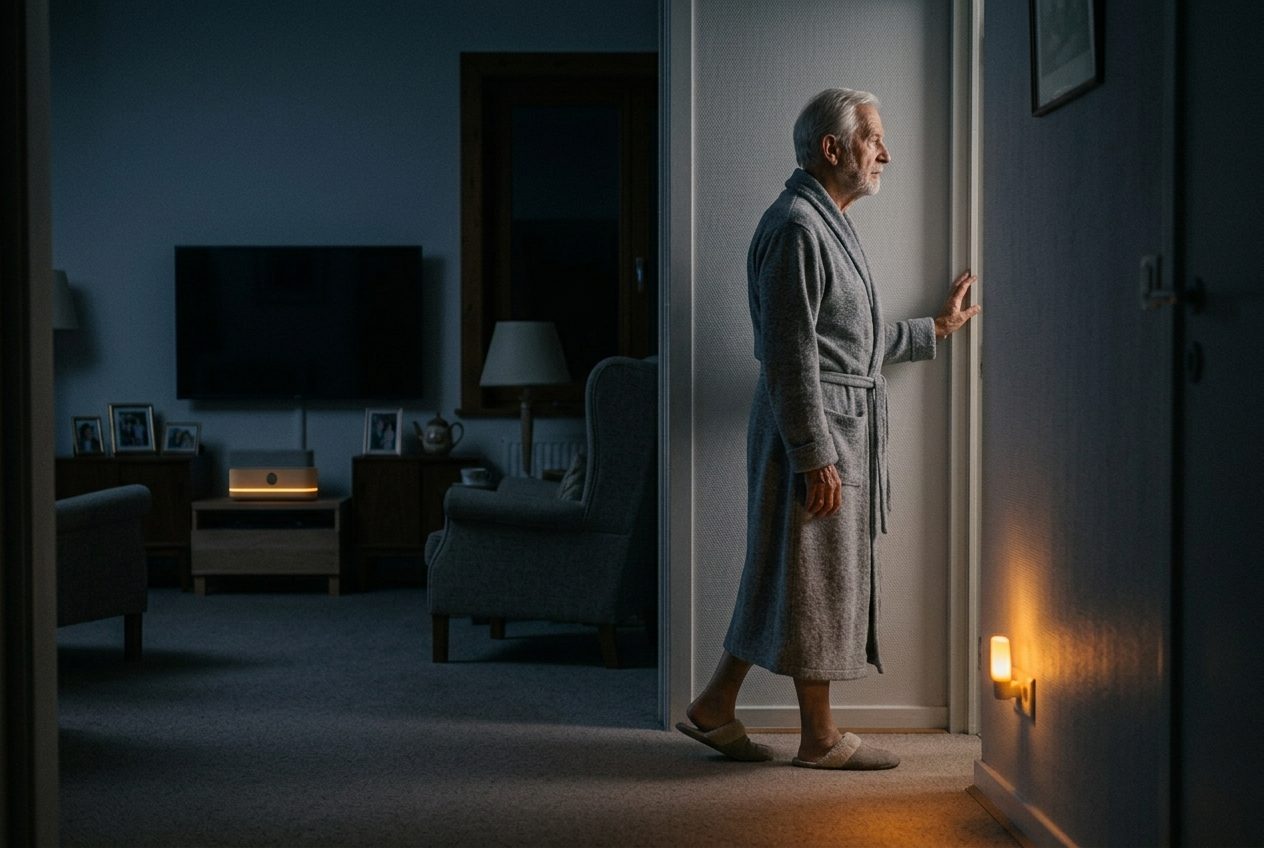
Front door opens at night.
Gioia
Asks through the hub: “Are you alright?” Back in bed two minutes later. No one is called.
Night-time bathroom visits, last three weeks

The band is the usual range. Illustration.
1. Gioia asks first
You were up a few times last night. How are you sleeping?
Not great. And it stings a bit.
2. One message to Sarah
Dad has been up 3–4 times a night since Sunday and says it stings a bit. Worth a call tonight, and maybe a GP check.
Called himNot neededPlease call me
An older man in a dressing gown and slippers walks through a dark hallway at night, one hand on the door frame, lit by a small night light; in the living room behind him the hub glows softly amber.

Slow changes go in the weekly note

If outings decline over months, the weekly note says so. No alarm.

Clear signs trigger a check

Not up at the usual time, or out at night and not back in: Gioia asks. If there’s no answer, it calls family.

A silent sensor is a fault

If a sensor stops reporting, we fix it. Missing data never counts as a normal day.

Room sensors are optional and need their consent. Gioia doesn’t track location, doesn’t use the camera for this, and doesn’t diagnose.

For families

You can’t be there every day. The worry comes anyway.

Between school runs, meetings and a two-hour drive, most check-ins are rushed phone calls.
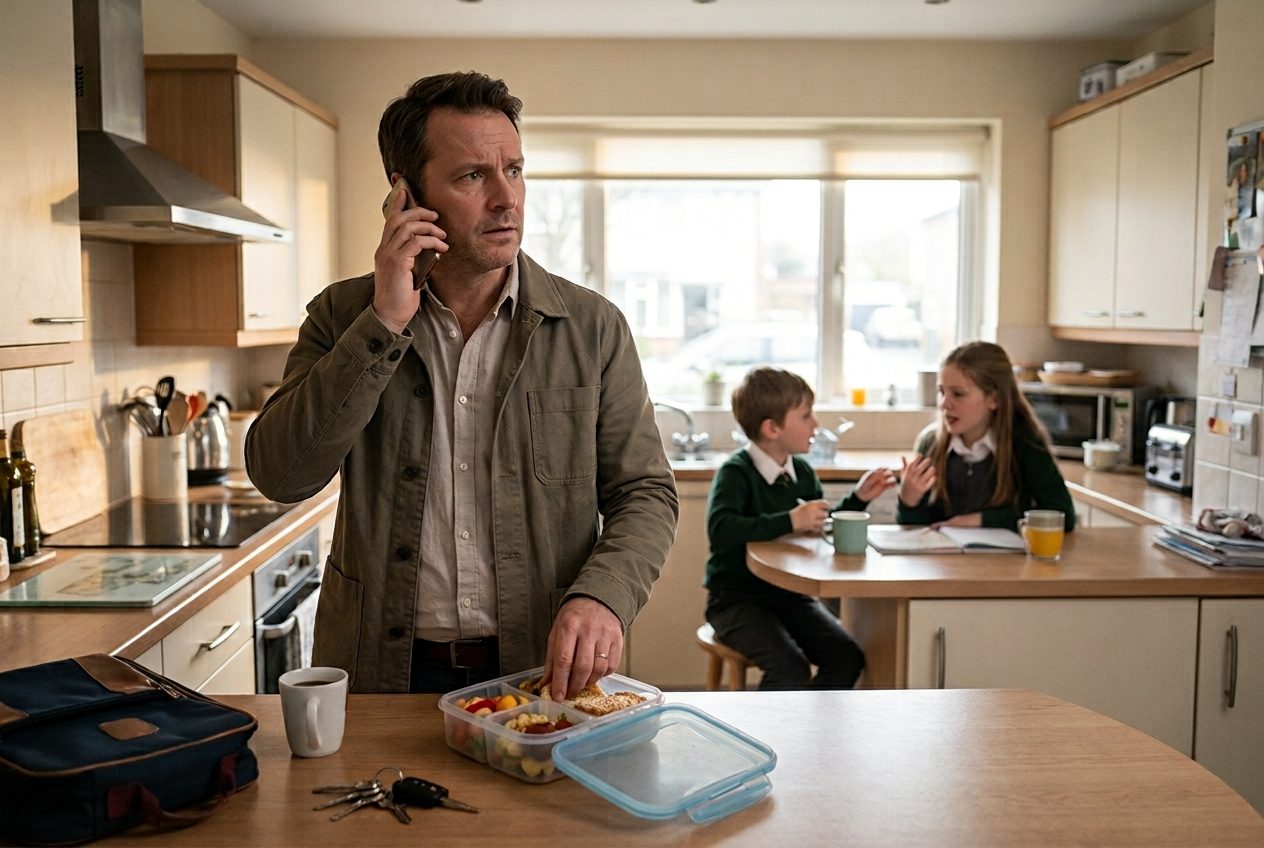
A man in his forties on the phone in a busy kitchen, packing a lunchbox, frowning, while his two children eat breakfast behind him.
For Mum & Dad · Wednesday
Prep tomorrow
Photo: the garden in JuneMorning
Voice note from Tom, 0:20Anytime
Sunday morning playlistEvening
Mum has a GP visit tomorrow at 14:00. Ride booked: pickup at 13:30.
Mum and Dad played Tom’s song twice tonight.

Three minutes tonight, a better day for them tomorrow.

Send a photo, a voice note, a song or an outing idea from your phone. Siblings see what the others sent, so it isn’t all on one person.
  • Delivered at the right moment. Your voice note plays when they stand up or turn the TV off, not in the middle of their show.
  • A weekly note. Walks, reminders confirmed, who they talked to, what they enjoyed. Only the topics they chose to share with you.
  • Rides, arranged. For a GP visit or an outing they’ve said yes to, Gioia books a local ride service and confirms the pickup time by voice. You see it in the family app.
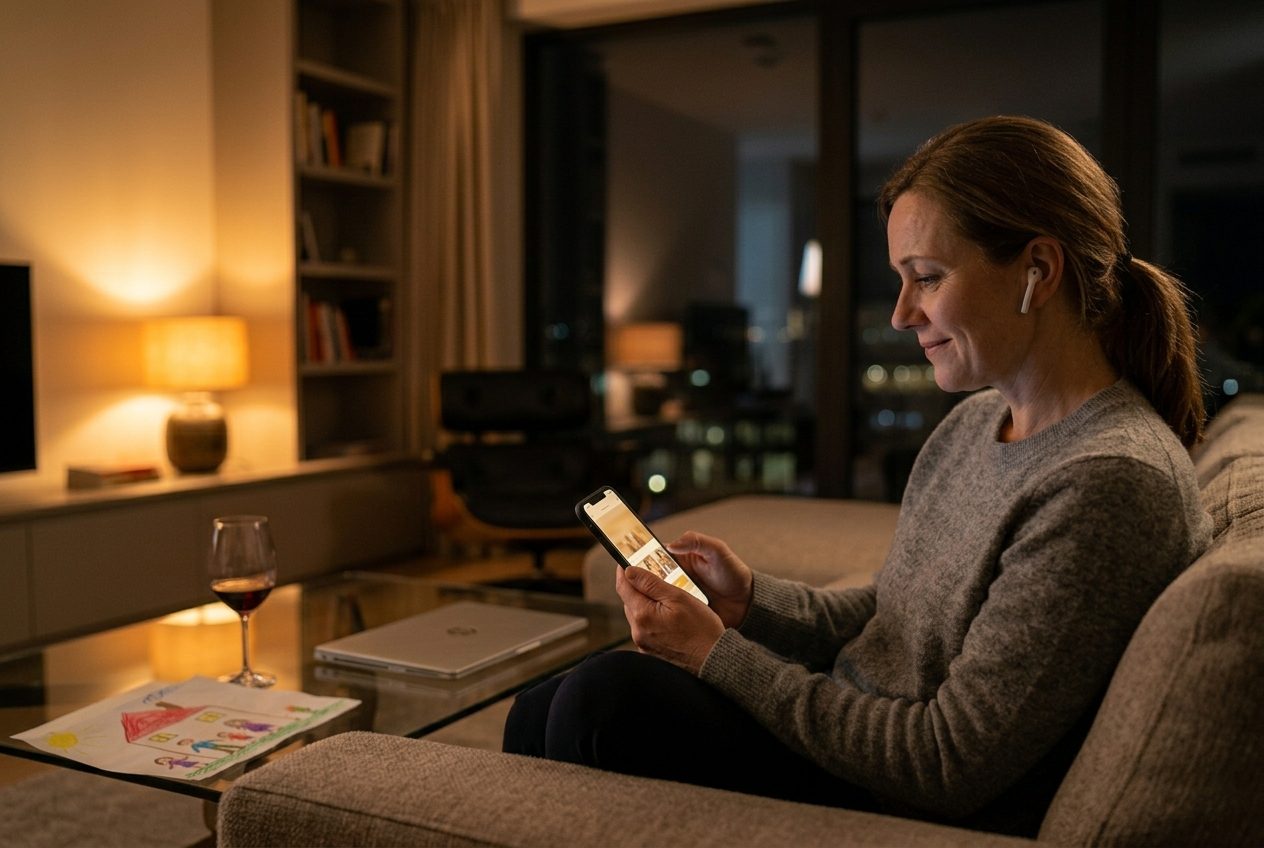
A woman in her forties on her sofa late at night, smiling softly at her phone, laptop closed beside a child’s drawing.

Five steps, each one their choice

Start with the TV. Add the rest only if they want it.

Each step works on its own and needs their consent. They can switch any of it off by voice.

  1. 1JoyDaily suggestions, voice companion, reminders. Nothing is shared with family.
  2. 2FamilyPeople they invite send photos, notes and plans, and can video call when they accept.
  3. 3Weekly noteA short summary for chosen family members, topic by topic.
  4. 4SensorsDoor, fridge, bed and bathroom sensors learn their routine and flag changes. They’re asked first.
  5. 5ResearchIf they opt in, anonymised data supports research into ageing at home.

Privacy

Private by design.

Camera off by default

It has a physical shutter and a light that’s on whenever it looks. Images aren’t stored or uploaded. Video leaves the home only during calls they accept.

Sensor data stays home

Raw readings never leave the hub. Only short text and daily numbers do, without names. Voice recordings aren’t kept.

They see what’s shared

Their screen shows what’s shared with whom. “Stop sharing my walks with Tom” takes effect immediately.

No false reassurance

Gioia reports what changed. It doesn’t diagnose and never says “all is well”.

Always a machine

It never pretends to be a person, never imitates your voice, and says when it passes something on.

Rules agreed together

Each family sets its own rules with their parents, like screen-time rules at home. Gioia applies them.

The Gioia hub and its optional add-ons laid out from above: motion sensor, door sensor, bed sensor strip, voice puck, big button and a small e-paper board.

One box, the TV they already have.

Join the first families.

We’re looking for a small number of families in Belgium and the San Francisco Bay Area with a parent who lives alone. [PILOT START DATE AND TERMS]

We’ll only use your email to talk about the pilot.

By asking to join, you agree that we keep your email and region for this. See the privacy notice.

Sources

  1. AARP, 2024 Home and Community Preferences Survey: 75% of adults 50+ want to stay in their current home. www.aarp.org
  2. Administration for Community Living, 2023 Profile of Older Americans: about 28% of community-dwelling adults 65+ live alone. acl.gov
  3. Donovan & Blazer, review of the National Academies’ 2020 report on social isolation and loneliness, citing Kuiper et al., 2015. pmc.ncbi.nlm.nih.gov
  4. Leisure-time television viewing and incidence of dementia, UK Biobank, 415,048 participants. Neuroepidemiology, 2023. pubmed.ncbi.nlm.nih.gov
  5. Livingston et al., Dementia prevention, intervention, and care: 2024 report of the Lancet standing Commission. doi.org
  6. US Centers for Disease Control and Prevention, via National Safety Council Injury Facts: older adult falls. injuryfacts.nsc.org
  7. Sherrington et al., Exercise for preventing falls in older people living in the community. Cochrane Review, 2019. pubmed.ncbi.nlm.nih.gov

These studies show associations at population level. They do not predict what will happen to any one person.